Spring offers up all sorts of flowers and I love when a native something-or-other that I’ve planted actually blooms. So far this spring, I’ve been gifted with a bunch.
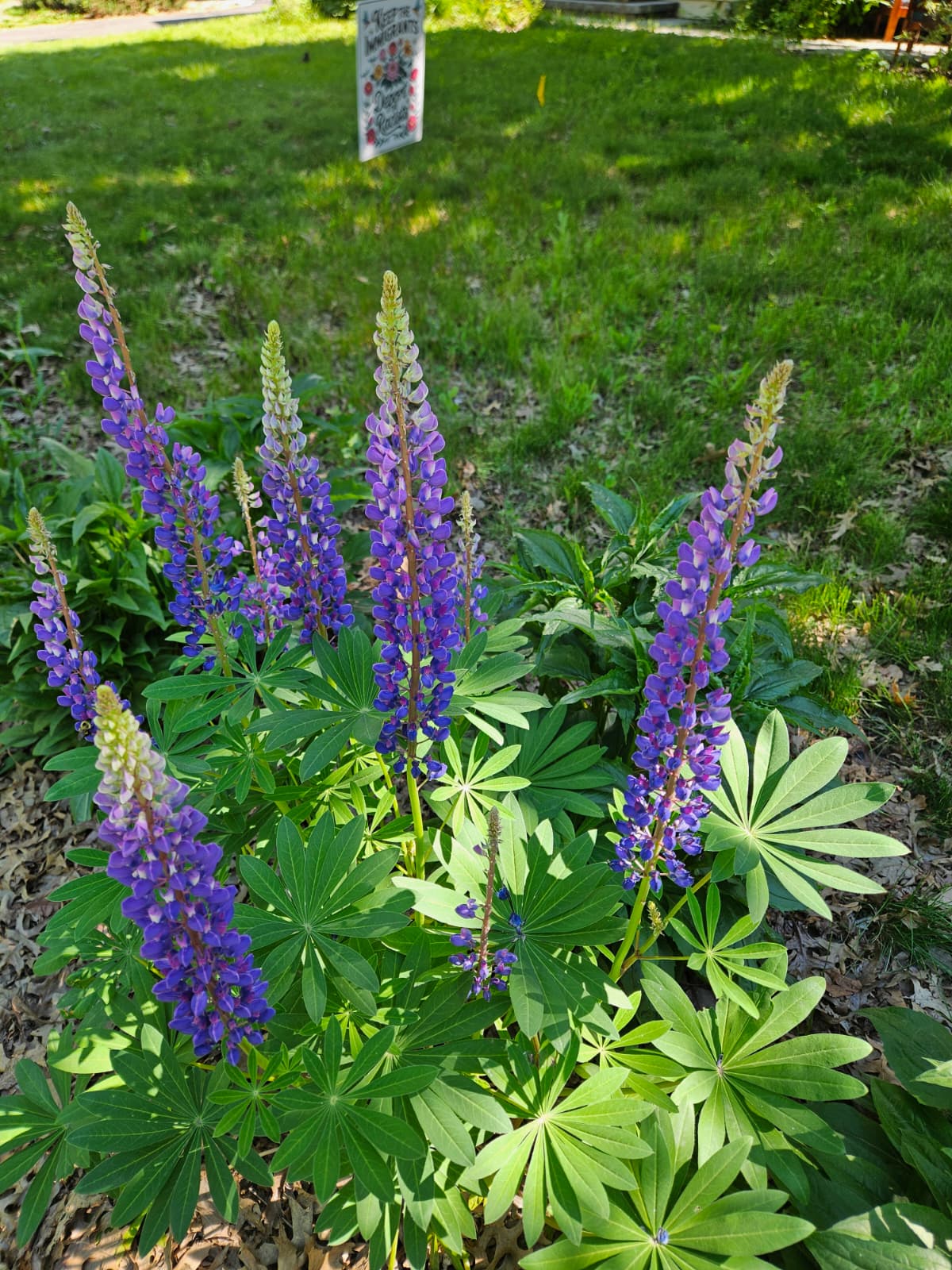
This is lupine, known for its festival at the Albany Pine Bush and for being one of the Karner Blue Butterfly’s favorite foods. I planted lupine seeds in the strip in the front of our lawn, and this one’s flourishing this year.
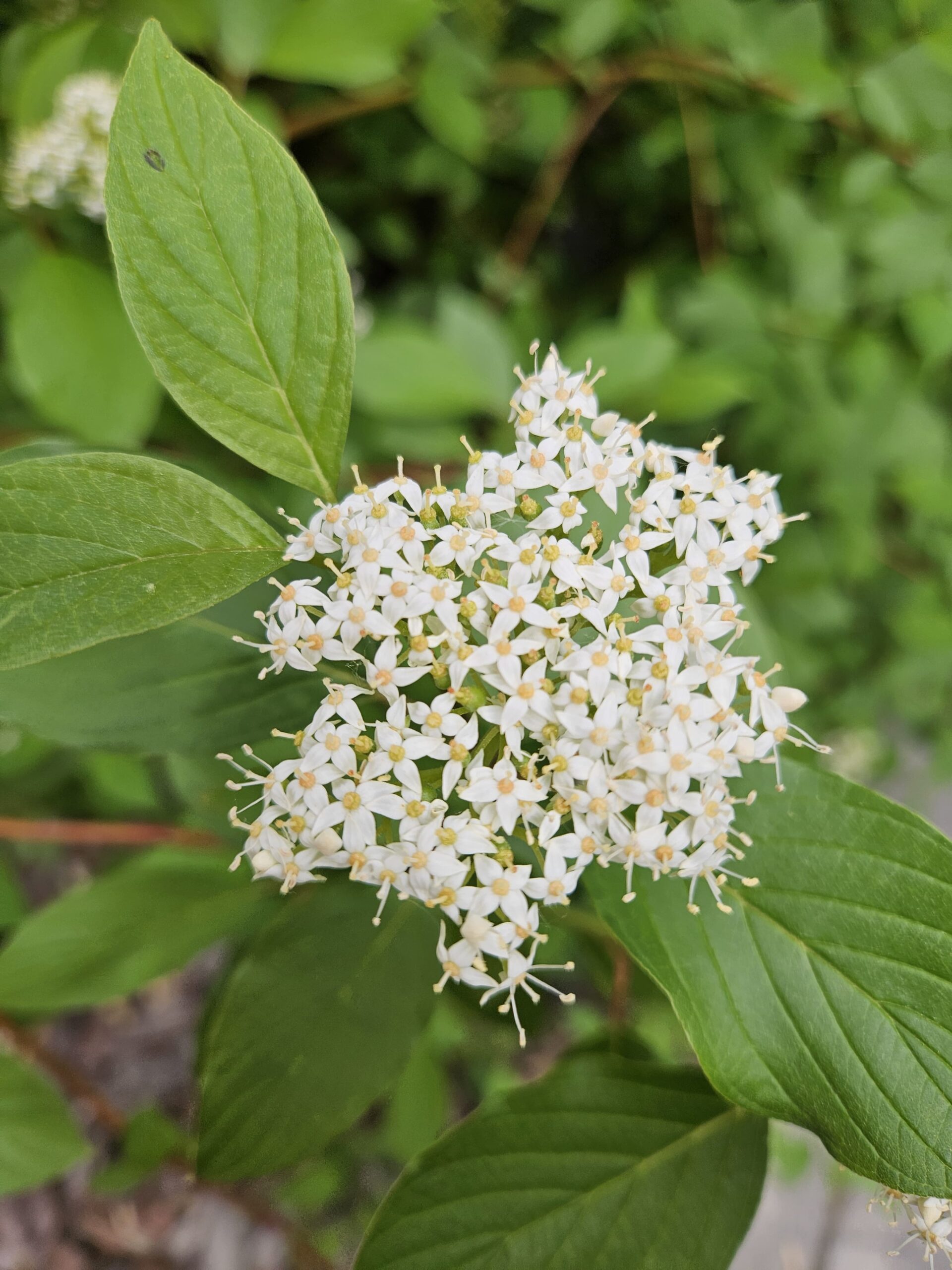
Our Red Twig Dogwood shrubs have grown like crazy ever since we planted them, and they produce these pretty white blossoms.
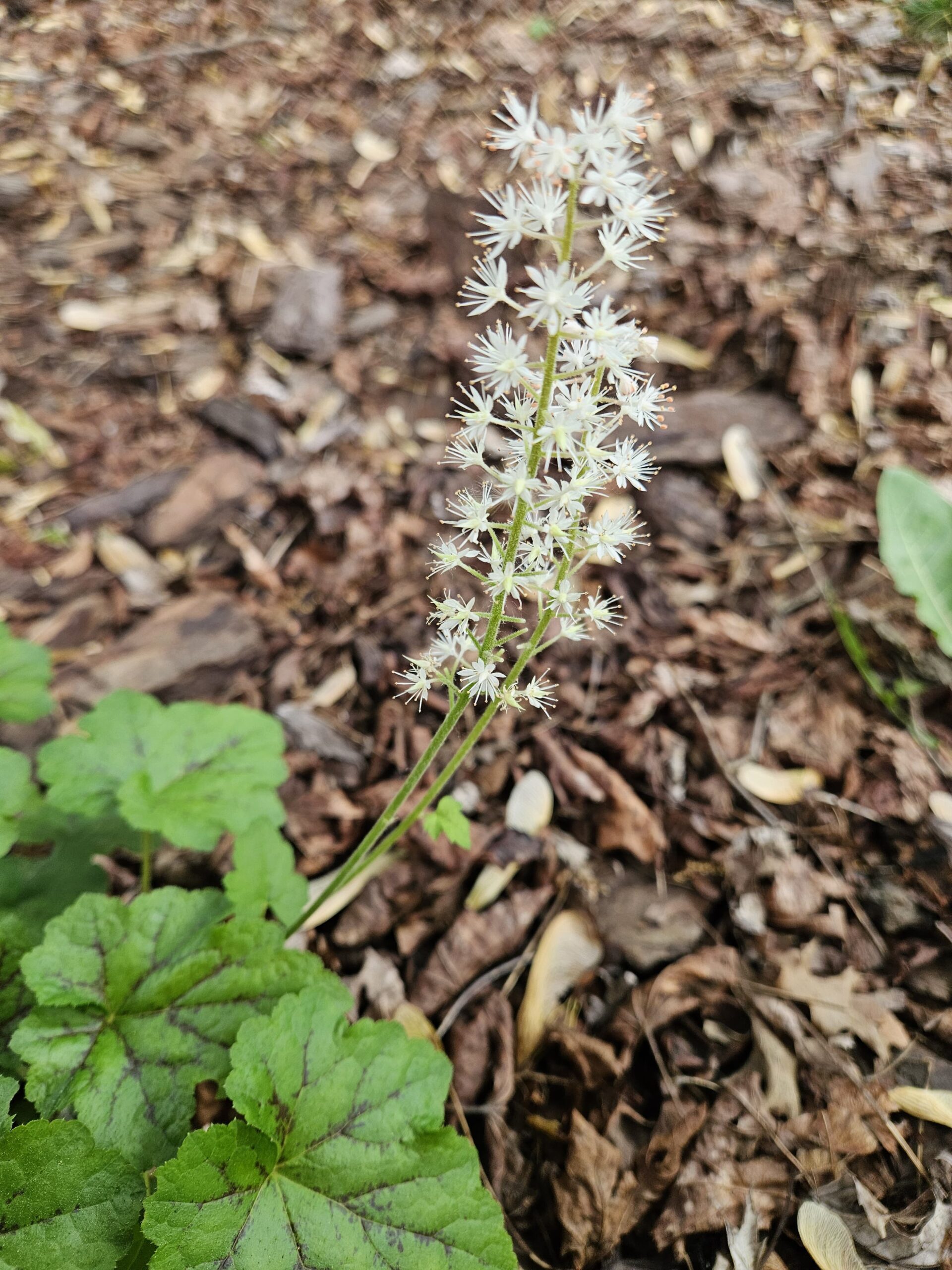
This bloom is from a Tiarella plant that we planted a couple of years ago. These plants are not doing too great, really. Part of the problem might be that they’re right under our Norway Maple, a big, beautiful tree that Cute W keeps joking that I want to chop down because it’s invasive. Well, it is invasive, but I’m not chopping it down. But some people refer to the area around a Norway as a “plant graveyard” because it has lots of shallow roots that suck up lots of water and nutrients. So while it is charmingly shady during the day and festive with lights that Cute W strung among the leaves in the evening, it has some real drawbacks, too.
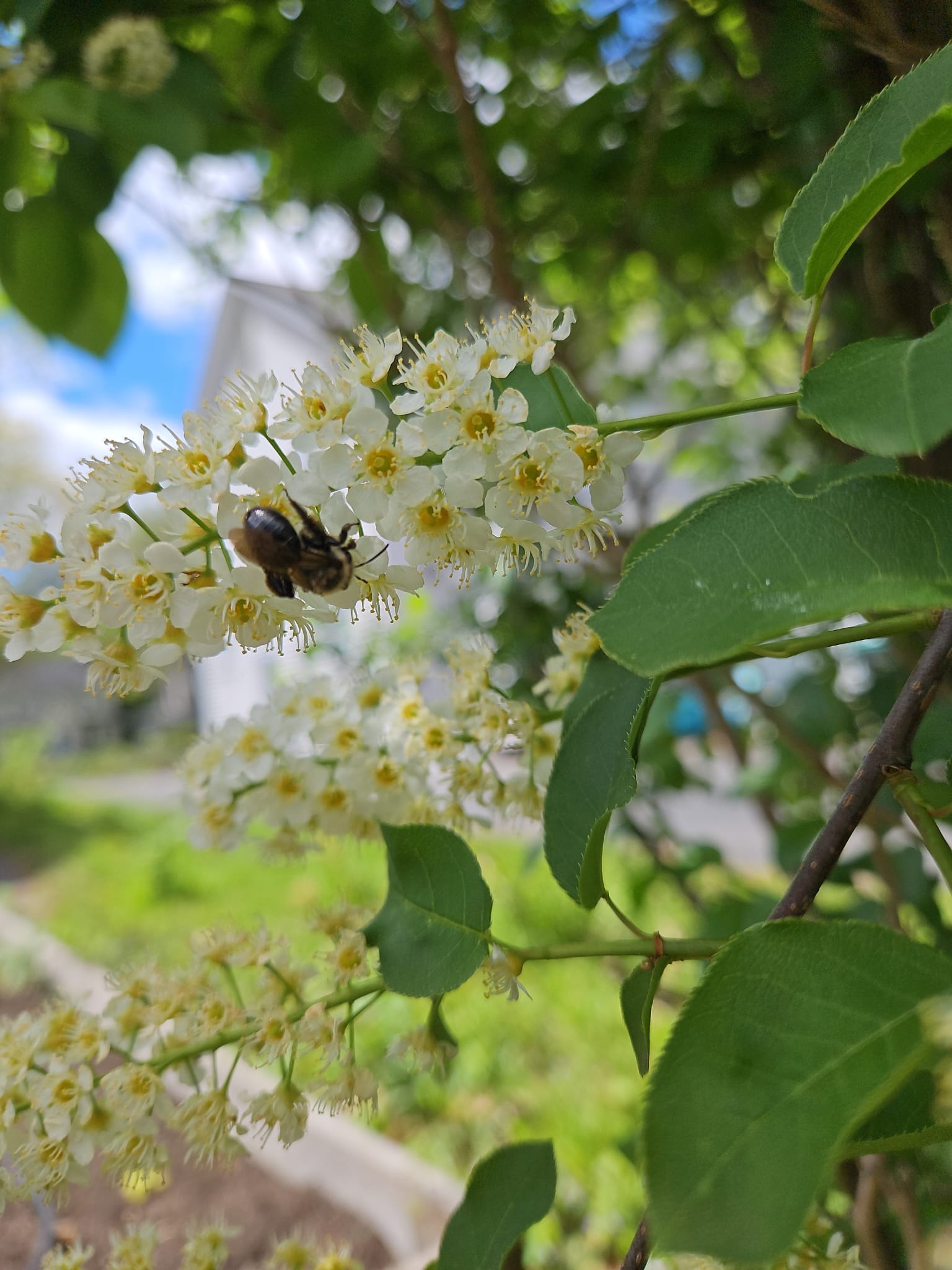
This is from a Chokecherry bush that preceded our arrival at this house. This insect is demonstrating some love: it’s almost impossible to get a picture without a happy bug this time of year. They love these blooms so much that the whole shrub buzzes.
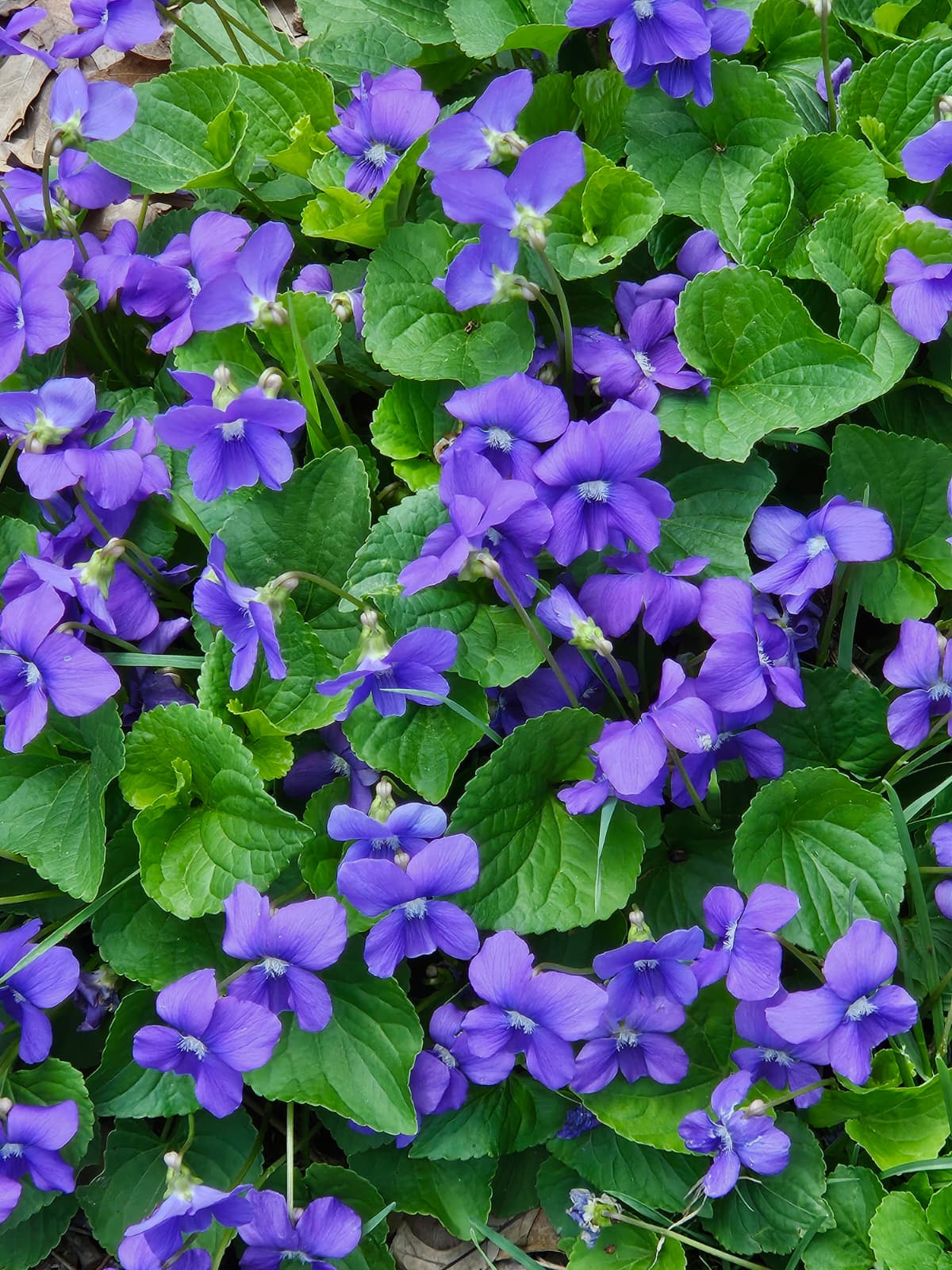
These are common blue violets, and yes, okay, they are common, but they still bring me joy.
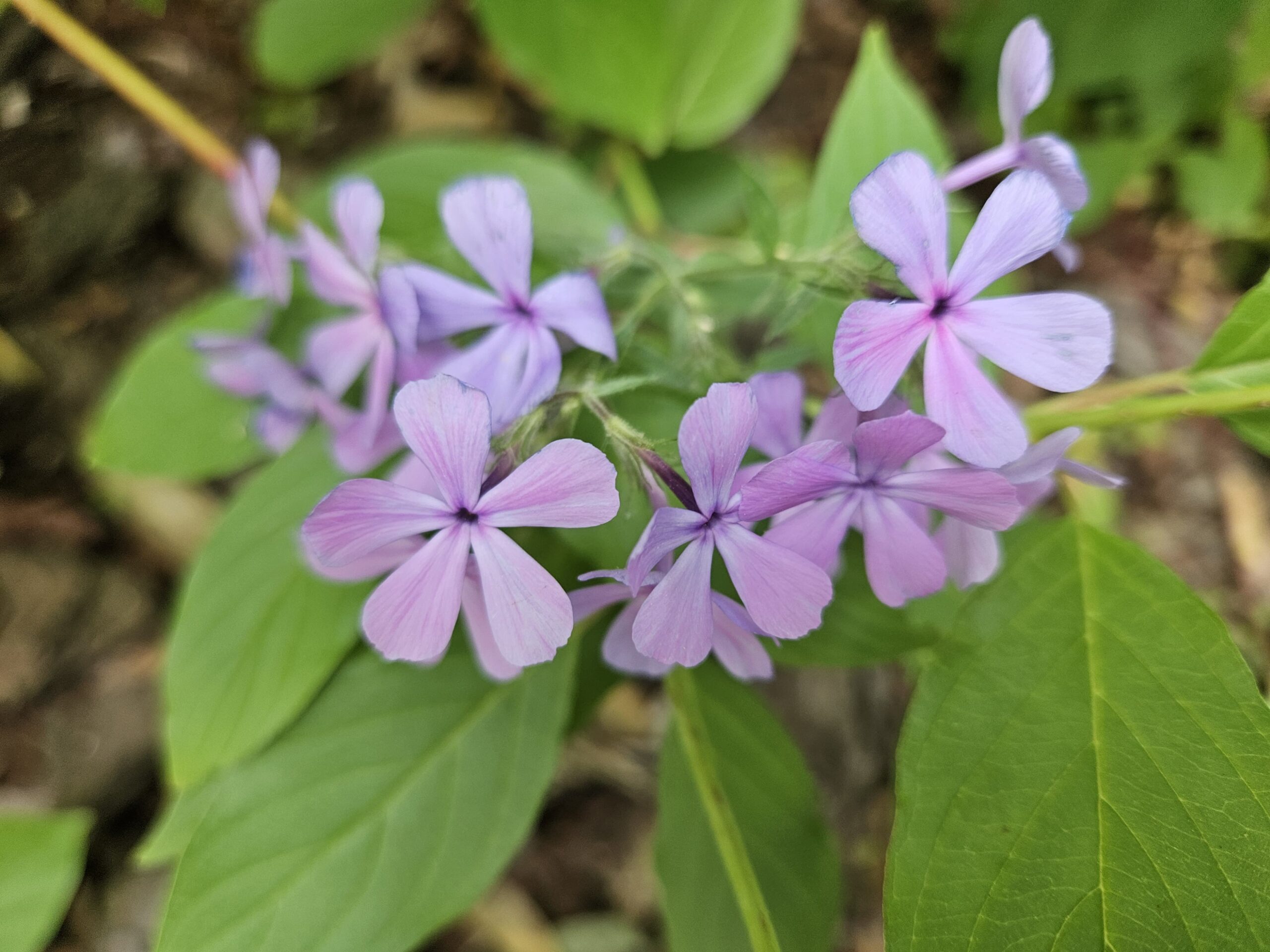
I love Phlox and I’m majorly jealous of the houses that have sunny rocky hillsides overflowing with phlox. I have planted phlox, but I don’t have any sunny, rocky hillside, and so far I haven’t found a place where they are absolutely flourishing in the way I admire so much on my neighborhood walks. But I do appreciate the ones I get.
And finally, we’ve adopted a new baby:
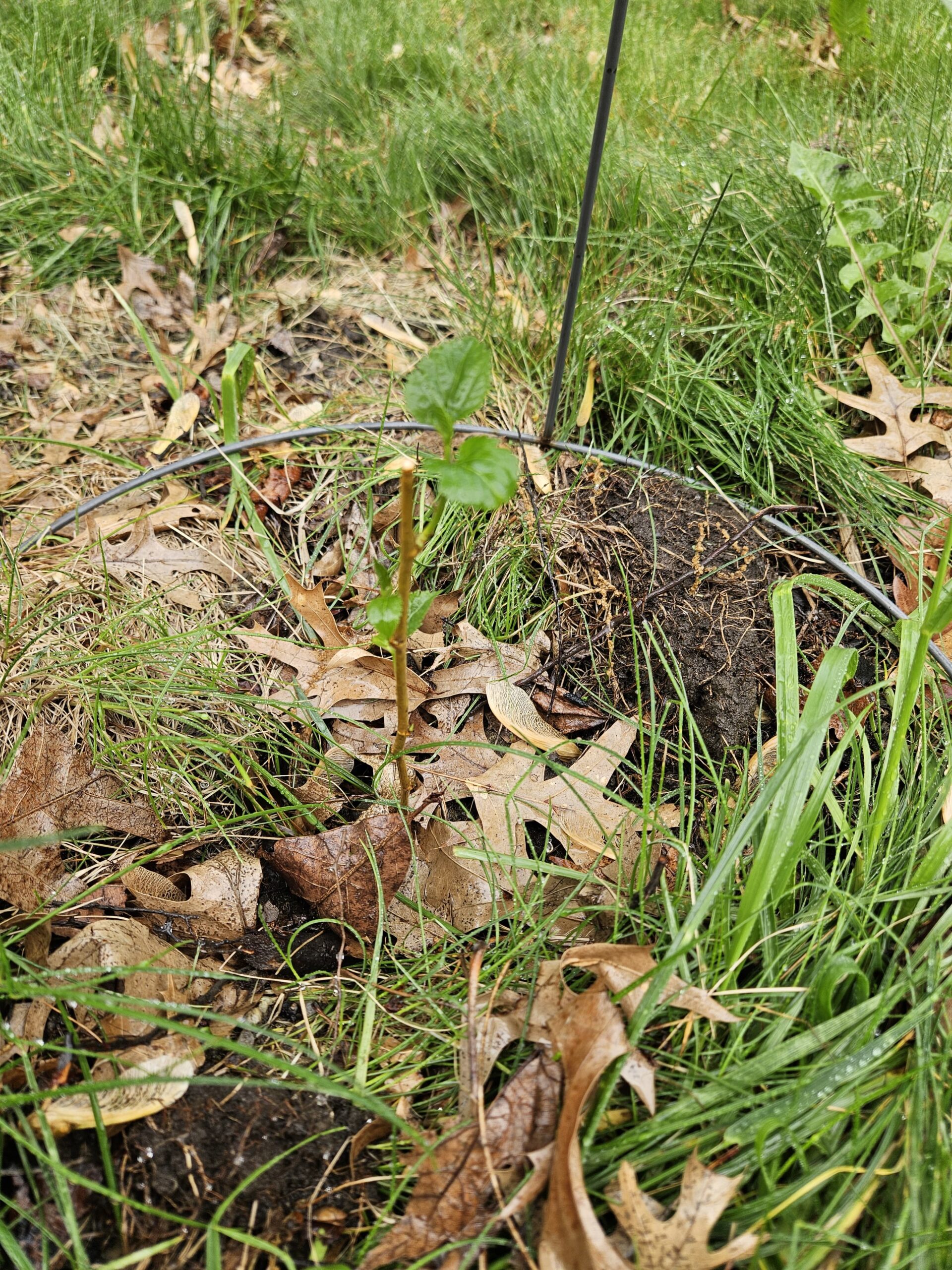
This little upright twig with about three little leaves is a red mulberry tree. This was a special request from J: she grew up loving the red mulberries growing around our neighborhood. She’d help herself to the berries whenever she could. A lot of people can’t stand these trees because the mulberries really are a mess. And a couple have been cut down recently, which made her sad. So we’ve planted this in our front yard with the plan to keep it pruned so that in the future, berries will be within reach but not splattering all over our sidewalks or our neighbors’ driveway.
And it’s already doing well. Here’s an updated picture that I took today:
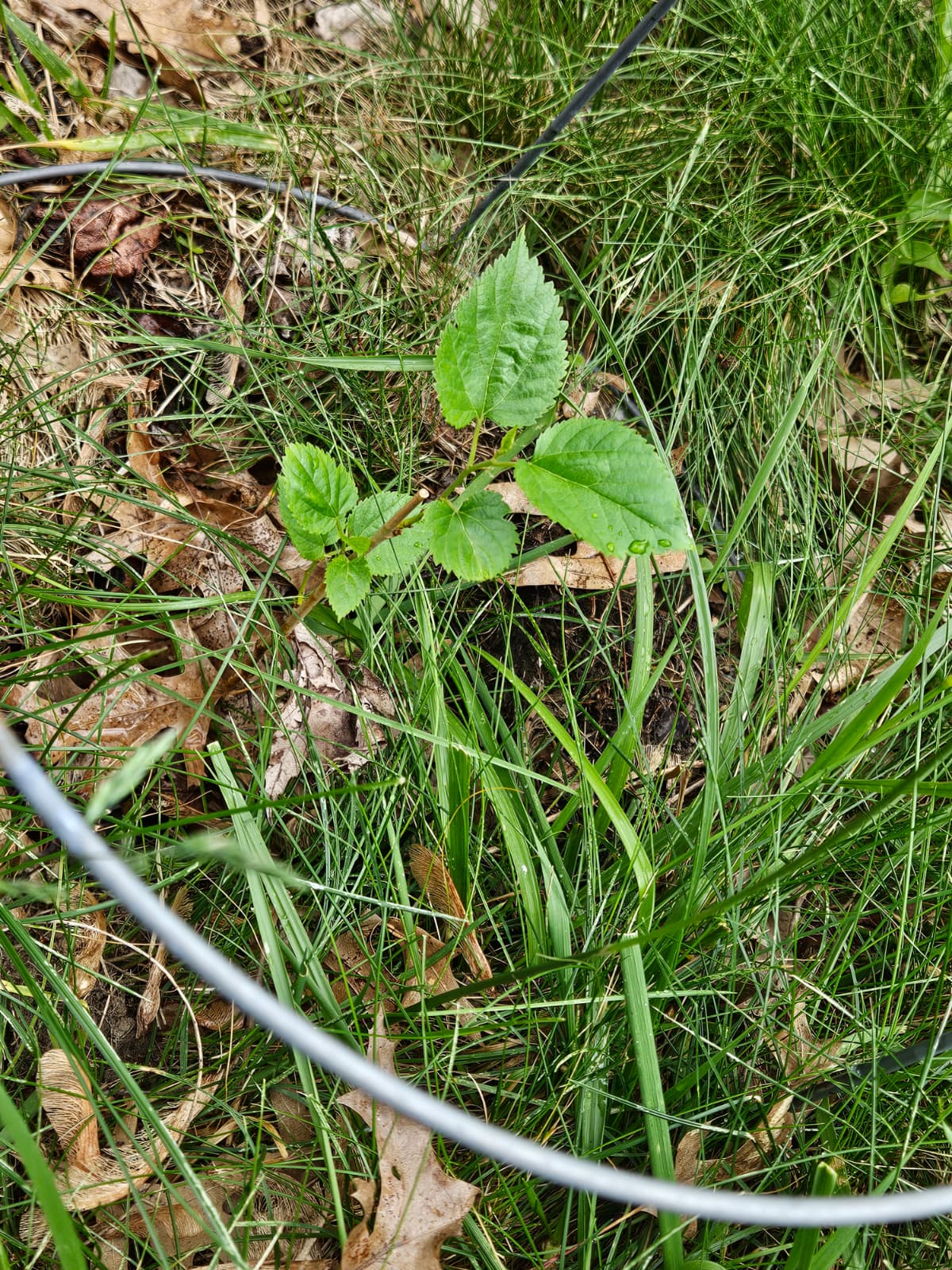
That’s right, y’all! It’s working on sprouting its ninth leaf already. I’m so proud!
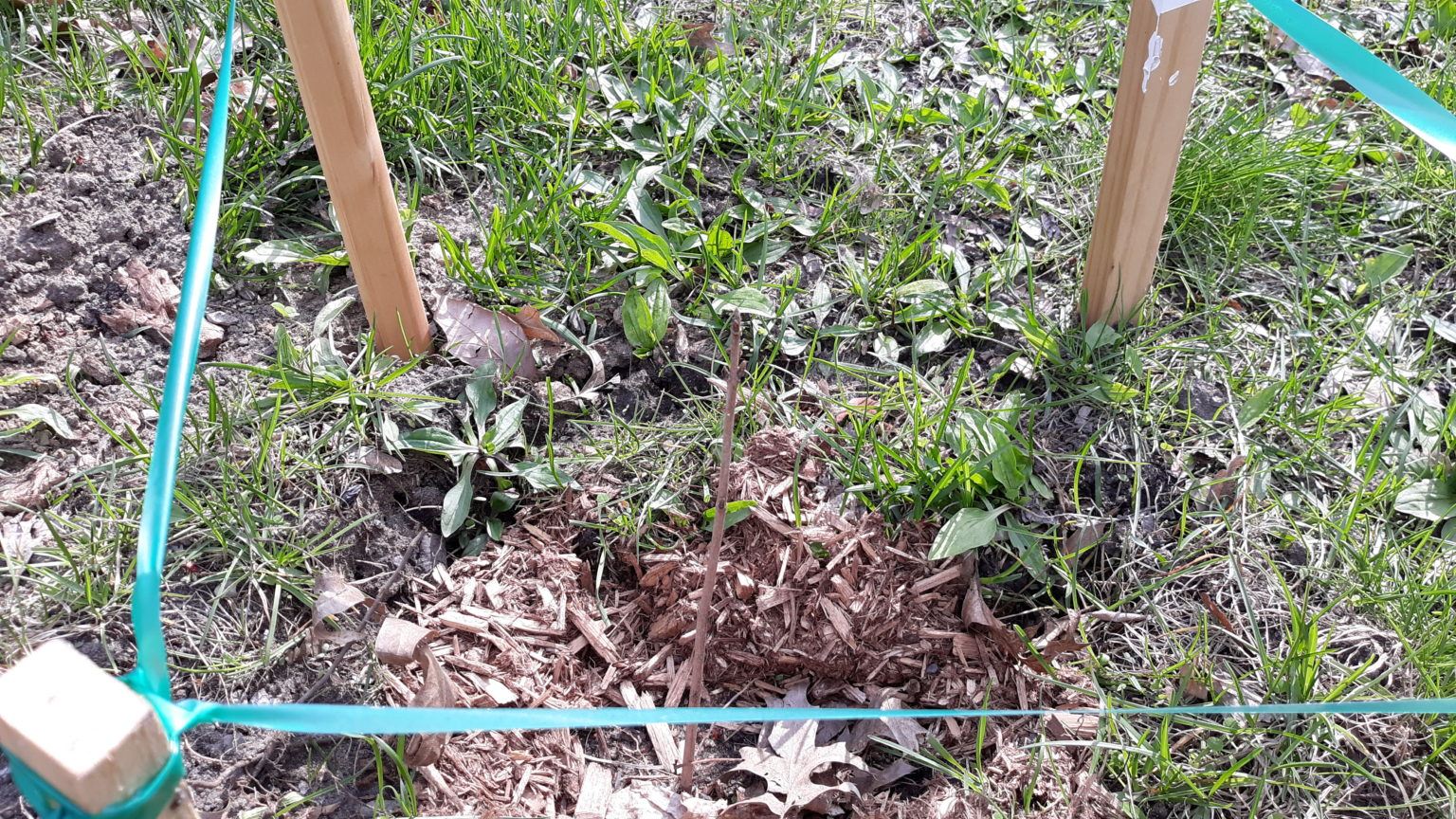
Actually, this reminded me that it hasn’t been too long since the last time I planted another little twig of a baby tree. For Arbor Day 2020, I “celebrated” the fact that all our typical activities were suspended by going to the Niskayuna Town Hall and claiming a free tree, a little sugar maple. You can see it just after it was planted (the stick in the center of the photo) on the left, and then an update I shared in 2023, just three years later, on the right:
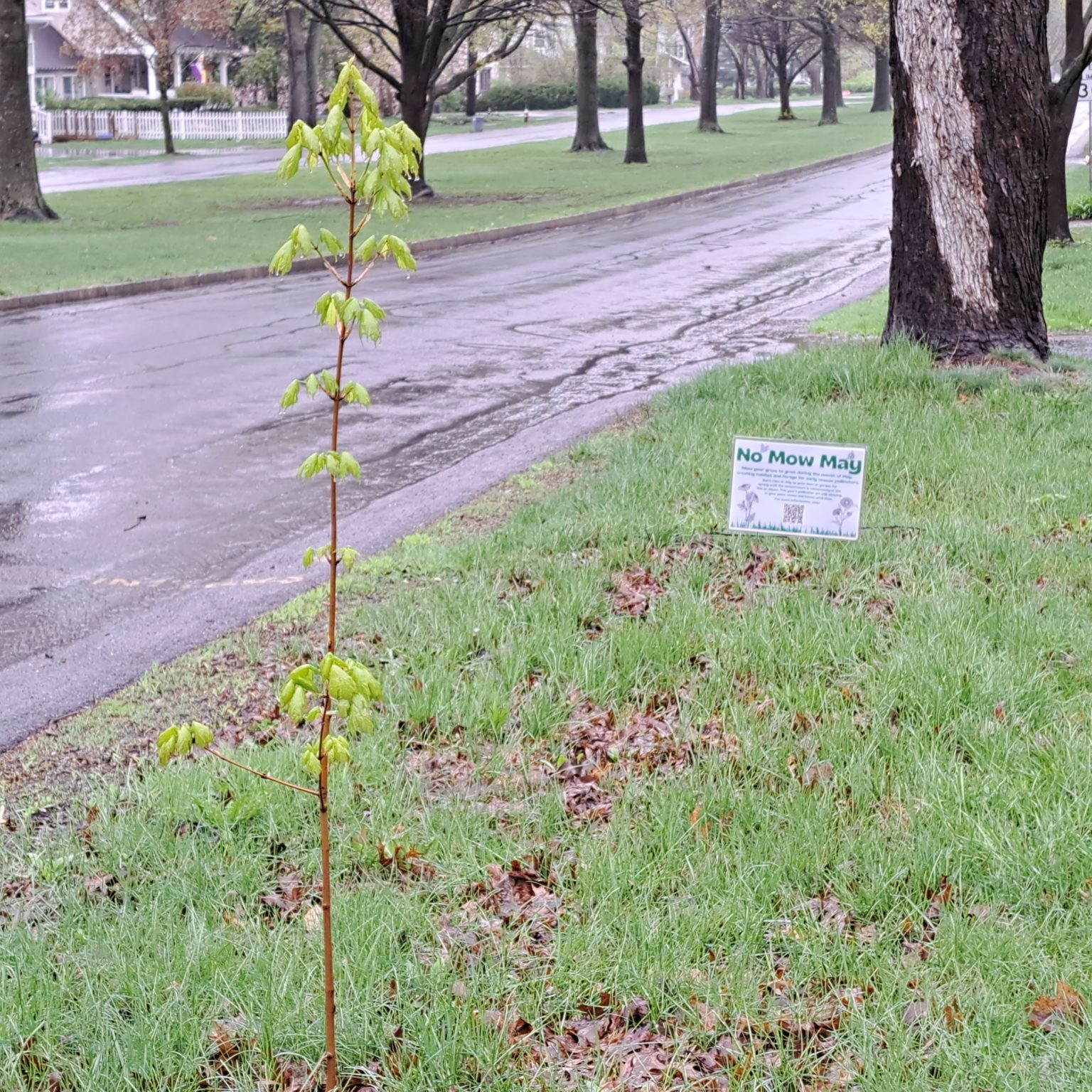
Are you ready to be extremely impressed with my and-three-years-later update? Look at this beauty!
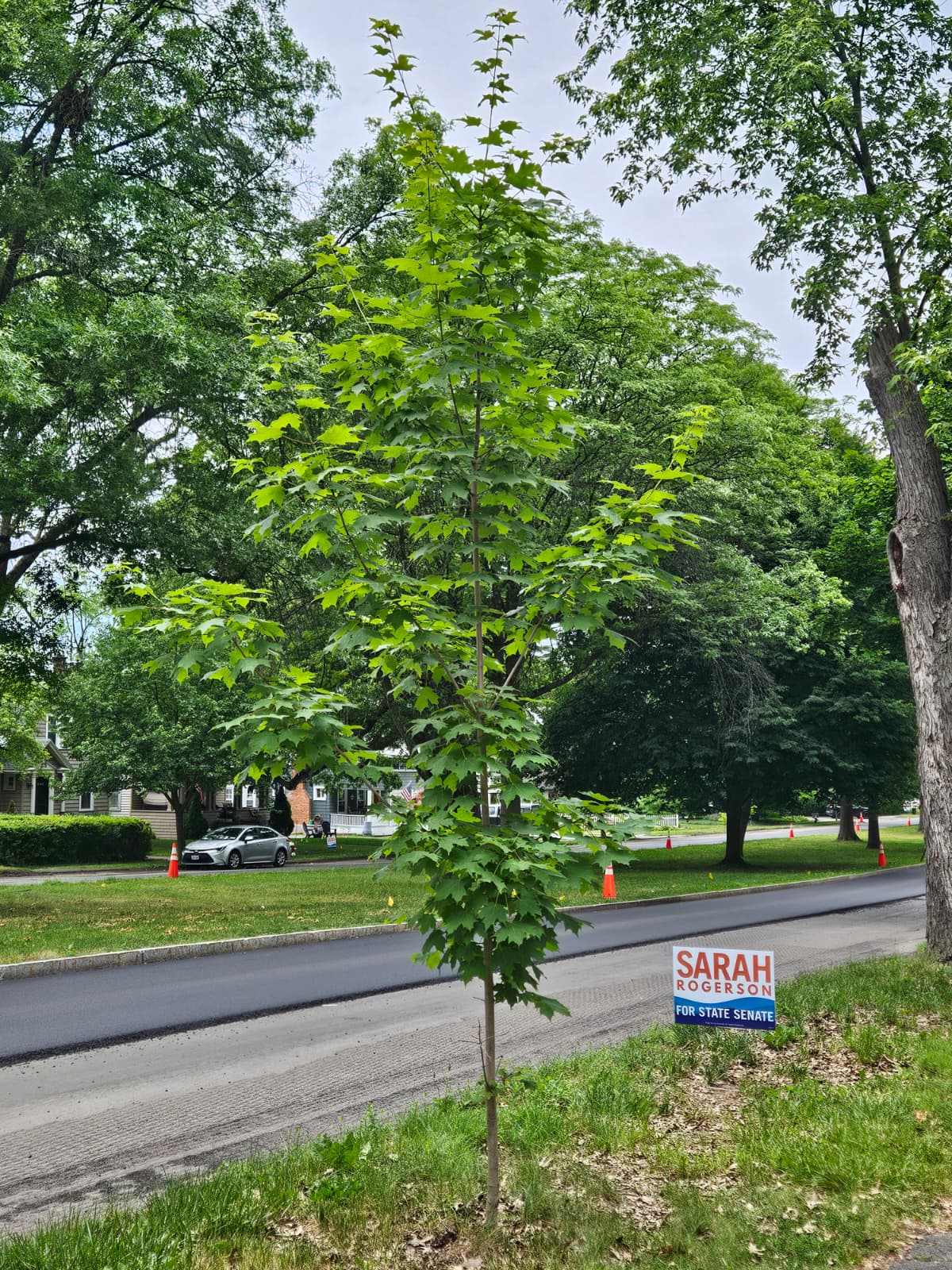
Gorgeous, am I right? So tall! I have been complimenting these trees profusely. I spend a lot of time bestowing affection upon my houseplants and the baby trees. Now some might say that this is because I work from home, my children have moved away, and I need to get out more. They might have a point.
But it really is scientifically proven that supportive chat and happy vibes help plants grow (something that I have believed ever since that dreamboat Calvin O’Keefe conducted his plant experiments in A Wrinkle in Time). And I’ve become even more attentive since reading The Hidden Life of Trees by Peter Wohlleben, which has all sorts of super-interesting tree facts. I particularly appreciated his 22nd chapter on Hibernation in which he gave a far more thorough explanation of why leaves change color and fall in the autumn than the vague “uh, the sun isn’t so strong and they lose chlorophyll” I provided my daughter when they asked. It has also put the Pando tree on my must-see list (the Pando looks like a forest of aspens, but it’s actually a single tree that spans over 100 acres).
The book’s also got me a little extra sad that I’m going to have to murder a couple of black walnut “volunteer” trees that have sprouted up much to close to our house’s foundation. I aspire to dig them up with enough roots to gift them to someone via my “Buy Nothing” group, but I’m waiting for some cooler weather before I set about that task. For now, I fully intend to settle myself in front of an air conditioning unit with a book.


